Table Of Content
Chipboard is the most cost-effective, widely engineered wood panel in the world. It is the base of flat pack furniture, floors, whole houses, picture frames, and even the carcass of almost all kitchen cabinetry that you've ever owned. Unfortunately, not everyone is aware of what it is, how to make it, and when to use it.
Knowing chipboard can help you make better choices, whether you're a business owner looking for packaging solutions, a do-it-yourself enthusiast working on furniture projects, or just interested in the materials used in common products.
From a builder to a DIY'er or business sourcer, this guide contains all the information you'll need to make an educated and informed decision.
What Is a Chipboard?
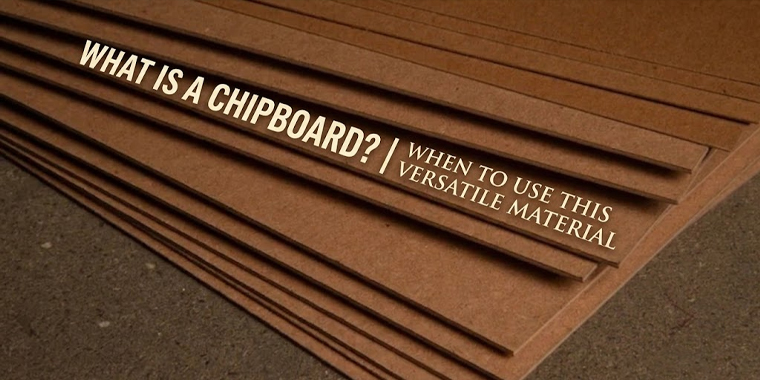
In simpler words, a chipboard is an engineered wood panel manufactured by the compression of chips, sawdust, and shavings. Then it is heated and pressurized with resin and adhesive. The result is a flat, uniform, and cheap board that is incredibly useful in a wide range of industries. No doubt, it is a modern material of the mid-20th century to find an effective use for wood waste. It puts off-cuts and sawmill scraps to good use.
Besides, it can be referred to as particleboard or particle board as well. A few other names are used in certain areas, such as low-density fiberboard, but this is less commonly used.
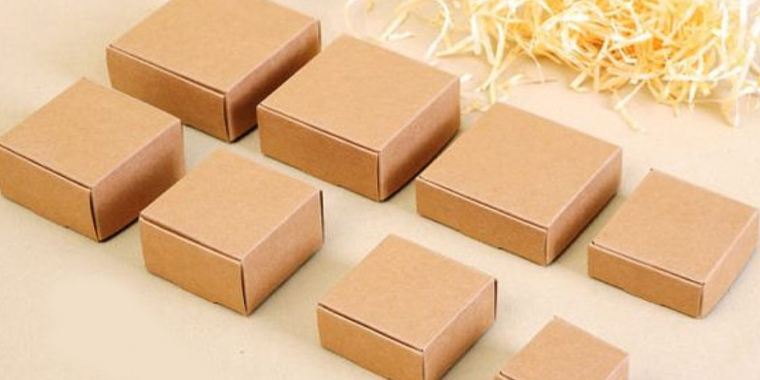
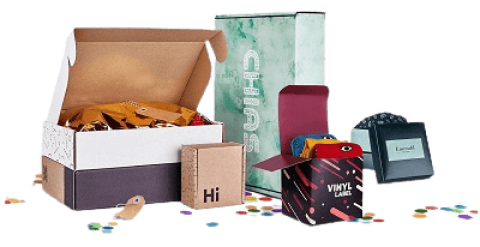
Luckily, it is a more economical and environmentally friendly option available in different densities, thicknesses, and finishes. You can even find the best chipboard boxes for versatile use.
How Is a Chipboard Made?
Knowing what chipboard is made of will help you to use it wisely. The process is both genius and efficient.
Raw Materials:
One question arises in my mind: “What is a chipboard made of?” Chipboard is produced from wood chips, sawdust, and wood shavings, as well as wood waste from industry. Synthetic resins (usually urea-formaldehyde or melamine-urea-formaldehyde) are used to bind these together. Further, some modern manufacturers recycle wood fibres to minimize environmental damage.
Step-by-Step Manufacturing
Step 1 — Chipping and Drying: Raw wood is small-chipped into uniform pieces. These are then dried in large rotary dryers to remove the moisture to about 2-3%.
Step 2 — Mixing with Resin: The dried chips are mixed with Resin Binders and Wax. The wax slightly increases the water resistance.
Step 3 — Forming and Pressing: The blended mix is pressed into a mat and sent to a hot press. The particles are fused by high temperature and pressure and form a solid panel.
Step 4 – Cutting and Finishing: Pressed panels are cut to the standard size. They are then sanded and can be raw, laminated, or veneered.
Bonus: Modern manufacturers are utilizing recycled wood waste in their manufacturing processes to 80–100%. This makes chipboard one of the more environmentally-friendly engineered wood materials available.
Core Properties + Qualities
It's good to have a clear understanding of the material you are working with before selecting a chipboard. The basic properties are:
- Weight:
Chipboard comes in a variety of grades and weights ranging from 450 to 750 kg/m³. Still, it is considered lighter than some plywood yet heavier than MDF.
- Strength:
Chipboard is surely suitable for medium loads, but not recommended for structural applications. It gets saggy and weak after long spans, for which no extra support is provided.
- Water Absorption and Swelling:
Normal chipboard absorbs water and expands. Where moisture is a concern, use moisture-resistant grades!
- Sound and Thermal Insulation:
Yes, it offers satisfactory sound and thermal insulation - best for interior walls and floors. As good as hollow panels, but not as good as specialist insulation panels.
- Surface Smoothness:
The raw chipboard is a slightly rough type. Laminated or veneered versions of the wood provide an easy-to-paint surface.
- Workability:
Cuts, drills, and screws work fairly well, but edges may chip. It is advisable to pre-drill to prevent splitting close to the edges.
Types of Chipboard
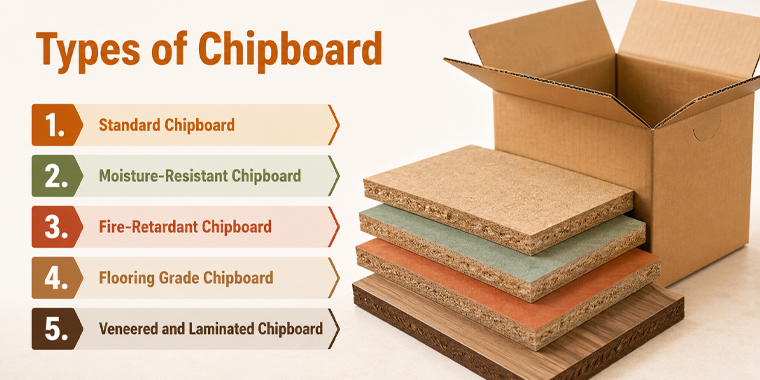
Chipboards come in a variety of varieties. Let's take a look at the most common types of chipboard that you'll come across:
Standard Chipboard:
It is the simplest version. Moreover, it is easy to use, low-cost, and suitable for interior panel use where the stresses are low, such as shelving and cabinet backs.
Moisture-Resistant Chipboard:
Untreated chipboard, specially treated with moisture-resistant resins! This type is commonly used in kitchens, bathrooms, etc. It comes in a green shade most often for easy identification.
Fire-Retardant Chipboard:
It is a chipboard that has been treated with fire-resistant chemicals. Essential to be used on commercial and public premises where the building regulations on fire safety are applicable.
Flooring Grade Chipboard:
Thicker and denser for use as structural flooring, this is frequently fitted together with tongue and groove edges to achieve a smooth fit.
Veneered and Laminated Chipboard:
Panels made of chipboard with a real wood veneer or plastic laminate are quite popular for their decorative qualities in furniture making.
What's the Difference Between Chipboard and Other Wood Panels?
All wood panels are not created equal; the following is a very handy tip for distinguishing between them:
Chipboard: Constructed from larger pieces of wood + the cheapest + easiest to wear after a time + best for interior applications.
Plywood: Thin layers of wood veneer glued together + more durable and resistant to water than chipboard.
MDF (Medium-Density Fiberboard): Has a smoother surface + created from fine wood fibres + more compact yet weighty than chipboard.
OSB Oriented Strand Board: Wood strands layered together + mainly used for structural and construction projects.
We have compressed it into a table for a quick read.
| Feature | Chipboard | MDF | Plywood | OSB |
| Cost | Low | Medium | High | Medium |
| Weight | Light | Heavy | Medium | Medium |
| Strength | Moderate | Moderate | High | High |
| Moisture Resistance | Low (standard) | Low | Medium | Medium |
| Surface Quality | Medium | Excellent | Good | Rough |
| Best Use | Furniture, floors | Cabinetry, MDF trim | Structural | Subfloor, walls |
| Screw Holding | Moderate | Good | Excellent | Good |
What Is Chipboard Used For
A chipboard isn't the ideal material for everyone, but it is a perfect fit for some. Let's delve deeper into the uses of chipboard.
Furniture Manufacturing:
Flat-packed furniture comes with a chipboard as the basic material. Most of the wardrobes, shelves, TV units, and cabinet carcasses are constructed from chipboard. When laminated or veneered, it is as beautiful as solid wood and at a lower price.
Regionally, furniture applications consistently account for over 53% of total chipboard volume consumption, with the remaining allocation moving into the building construction and flooring sectors.
Construction Projects:
Builders often use chipboard for non-load-bearing interior structures such as partition walls, flooring systems, roof decking, and interior wall paneling.
For flooring, it is prized for offering thermal and sound resistance. Moreover, it is easy to paint, and it can be clad. Most importantly, the thickness is always to be chosen appropriately for the span and load requirements.
Packaging and Backing Boards:
Chipboard is an extensively utilized display packaging raw material for use as a rigid backboard for items that require protection with no heavy and expensive packaging. It is often used in picture frame backs, book covers, or product display boxes.
Read More: Packaging Types Explained: Materials, Functions, and Benefits
Bathroom Inlay Faucets
Chic-wood Cabinets and in-cabinet panels are manufactured using chipboard, which is also very cost-effective and helps to maintain structural integrity. In areas that contain high moisture, use sealed edges and sealant.
DIY Projects
Chipboard is a favourite amongst DIY-ers who are on a budget. Can be easily sourced, easy to cut, and takes paint and laminate nicely! This variation of cardboard is a popular choice of material for home projects such as workshop benches, storage boxes, and basic shelving.
Temporary Structures
Lastly, it is frequently used in construction sites for site hoardings, temporary partitions, and formwork. It is easily installed at a low cost and is suitable for situations where durability is not needed.
When NOT to Use!!
Chipboard has its limits! It is not used for a purpose that results in issues (and quickly_. Don't use it in the following situations:
- Flood-Risk Areas: The normal use of chipboard will swell, warp, and break down in rain and prolonged humidity.
- Load-Bearing Structural Applications: Chipboard is not strong enough for use as joists, beams, or spans. It cannot be used as a shipping box, for sure.
- The moisture-resistant chipboard is waterproof. Solid wood, plywood, or concrete is required for a flood-prone area.
- For high-strength applications, such as staircases, roof decking, or heavy shelving where durability and strength are essential, opt for plywood or OSB.
Wrap Up
Chipboard is among the most functional and economical materials that are used today in manufacturing processes as well as in the construction industry. It is the fuel of the furniture industry - it helps in supporting the ground below, it is used to wrap and protect things in packaging, and it is an affordable beginning for creative projects for the DIYer.
When used properly (in dry interior spaces, non-structural applications, with the appropriate finish), chipboard is a great value. Not used properly (in wet conditions or heavy load applications), it will not last long.
You've learnt about what chipboard material is, how it's produced, and you know when to use it; you're now in a better position to make better decisions for every project.
Looking to get your brand new and fully custom Chipboard Packaging or Custom Board Solutions? Call Custom Design Boxes at 888-385-1812 or check out our website to ensure that you get the best box ever, which is made of chipboard.
Frequently Asked Questions
We’re confident that you will love our products and service.

Abdul Waheed
With over a decade of experience in the printing and packaging industry, I’ve dedicated my career to helping brands reshape their identity with creative, sustainable, and cost-effective packaging solutions. Being the CEO of Custom Designs Boxes, my mission is simple: to balance innovation with affordability so businesses of every scale can enjoy premium packaging truly reflecting their vision. When I’m not strategizing for the next big packaging trend, you’ll find me exploring design inspirations, mentoring my team, and building lasting relationships with clients.