Table Of Content
Product safety and retail psychology collide in the battle of choosing the ideal packaging, and the correct choice can literally make or break your bottom line.
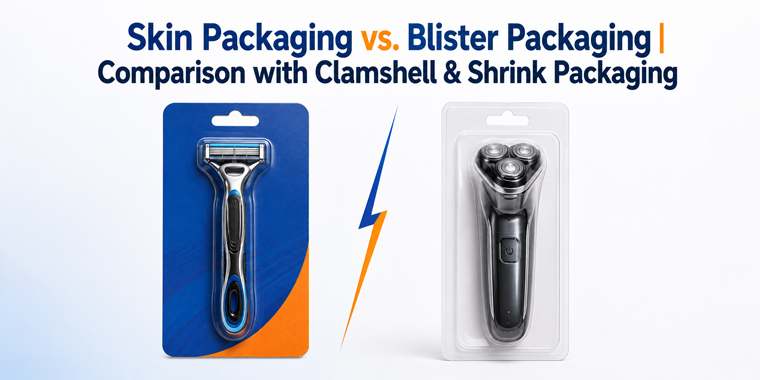
There is an entire world of packaging science going on behind that tidy, glossy, securely sealed appearance on store shelves. Skin packaging and blister packaging are two of the packaging types that are most frequently confused. Although they both retain things snugly and securely, they may appear comparable at first glance. However, they are made extremely differently with somewhat different vibes.
It is essential to know their mechanical subtleties, whether you are planning to cut down on per-unit prices of large volume goods or require a flexible answer to diverse kits. This guide decomposes the fundamental differences, benefits, and cost considerations in order to streamline your own workflow and give your products a spotless finish.
What is Skin Packaging?
Skin packaging is applied as a second skin in which the vacuum-seal technique is used to pull out the extra air, resulting in a vacuum-tight, heated plastic film (usually between 0.005 and 0.015 inches) over your product and onto a porous, adhesive-coated backing board.
In the manufacturing phase, the product is put on a sheet of paperboard (commonly varnished with a heat-seal paste). Thin plastic film is heated until it becomes flexible, and then it is covered over the product. Ultimately, a vacuum is created, which is removed with the designated equipment. Vacuum suction pulls the film tightly, and a thin layer surrounding the shapes of the object is formed. But here’s the catch: it’s not easily reusable, and opening such retail packaging usually destroys the pack.
Common Uses
- Hardware tools (wrenches, screws)
- Electronics packaging
- Medical instruments
- Small industrial parts
- Retail display items
What is Blister Packaging?
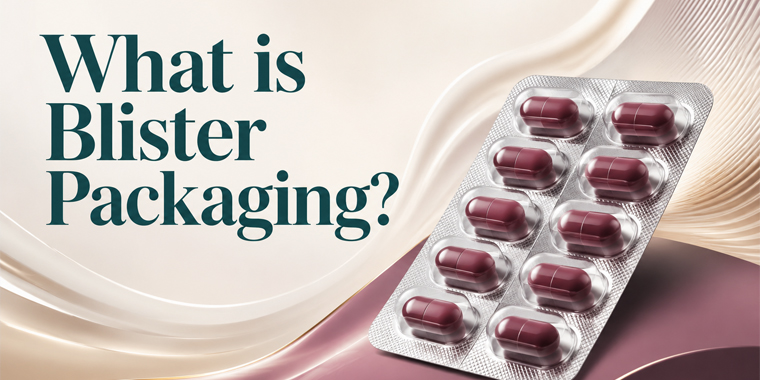
The blister card packaging is quite different in its architecture. Instead of being self-shaped, as with the product, the blister packaging consists of a pre-shaped plastic hollow (the "blister" or "bubble" ) into which the item is placed.
This blister is normally produced from thermoformed plastic, including PVC or PET, which is subsequently fixed to a back card or a second sheet of plastic. In the consumer retail segment, it is at the top and is meant for protecting delicate items against outside crushing forces. Plus, it’s slightly easier for customers to open compared to skin packs (though “easy” is still debatable sometimes).
Common Uses
- Pharmaceutical packaging
- Battery packaging
- Toys in retail stores
- Cosmetic packaging
- Small electronics
A Quick Comparison | The Fundamental Disagreements
The decision between these two techniques depends on the knowledge of how they work in the production line and look to the final consumer. Although they are both run on heat and plastic, their uses are different.
| Feature | Skin Packaging | Blister Packaging |
| Mold Requirement | None (The product is the mold) | Required (Pre-formed cavity) |
| Best For | Heavy or irregular industrial goods | Consumer retail, pharmaceuticals |
| Visibility | Excellent (Tight, clear film) | High (Defined, rigid window) |
| Setup Cost | Generally lower | Higher (due to custom molds) |
| Tamper Resistance | High | High (especially in sealed formats) |
| Appearance | Conforms to the product | Structured "bubble" look |
Why Choose Skin Packaging?
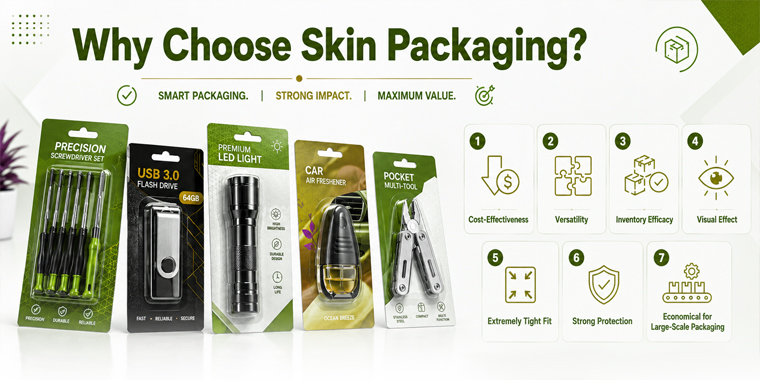
Your product is securely sealed under a transparent film for optimal visibility and safety in skin packaging, which is a clever combination of display and safety. It keeps things safe, hygienic, and undamaged during storage and transportation, in addition to cultivating shelf appeal.
Cost-Effectiveness
You are not required to make unique molds to fit each product size; skin packaging is far less expensive when it comes to producing small batches or having products with different dimensions.
Versatility
You can load various items onto one board without retooling your machine, and therefore, it is perfect to use with hardware kits or mixed parts.
Inventory Efficacy
Since the film matches up with the item, you do not have to have hundreds of pre-fabricated plastic shells in a warehouse.
Visual Effect
It gives an appearance of being locked in, so that the customers feel it to be extremely secure and solid. On the other hand, the product looks like it’s floating, which ensures greater visibility whether placed with a display boxes or not.
Extremely Tight Fit
Ensures that nothing moves during delivery by locking your product in place like a personalized mold. In addition to preventing dents and scratches, this lowers internal friction.
Strong Protection
It creates a shield that keeps out dust, moisture, and outside pollutants. Additionally, skin packaging absorbs small shocks from rough treatment when being transported or stored.
Economical for Large-Scale Packaging
It provides strong protection at scale with the least amount of material. When placing large orders, this is undoubtedly ideal for lowering the cost of packaging each unit.
Read More: What is Blister Packaging and Why Is It Essential for Modern Industries in 2026?
When To Use Blister Packaging?
When products require strong security, easy visibility, and attractive arrangement in a single pack, blister packaging is the best option. It is most effective for items that need to remain safe and well-organized while being stored or shown.
Product Protection
This hard plastic shell has better crush protection, which is paramount for sensitive medicines, expensive gifts, heavy-duty electronics, and fragile items.
Marketing Attractiveness
Blisters have a professional look that is mostly demanded in high-end retail settings as well as gift packaging. It delivers a neat presentation.
Flexibility in Design
You are offered the flexibility to create the blister with internal dividers, thumb notches, and in unusual shapes that will be noticeable in the overcrowded shelf.
Sanitary Control
In medical or food-grade products, the sealed blister can offer a sterile environment, which cannot always be assured with skin packaging.
Simple to Store & Stack
It saves a ton of space because of its flat, compact shape. Products can be stacked neatly without taking up shelf or warehouse space.
Strong Tamper Protection
It is hermetically sealed and contains a plastic cavity that makes it obvious if someone has attempted to open it. As a result, goods remain trustworthy, clean, and safe.
Pack Multiple Small Items
Tiny objects in separate compartments can be held and separated by it. Ideal when you want a single, well-organized pack rather than scattered bits.
Why One Wins Over The Other?
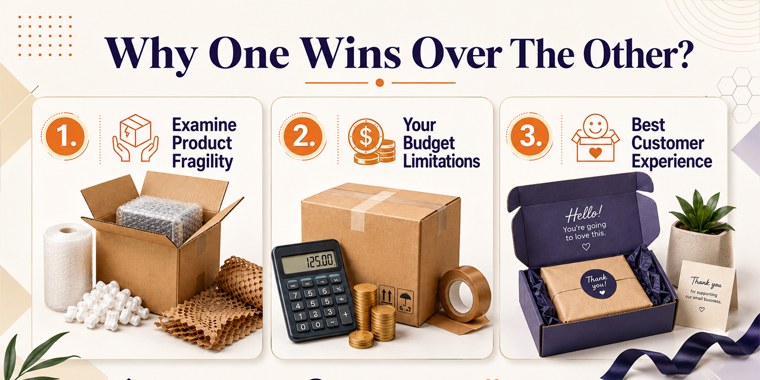
Not only does attractiveness matter when it comes to choosing the appropriate packaging, but your budget, the type of product you sell, and the distribution model you use also matter. Companies examine supply chains over and over again, and the common denominator is that the best packaging is the one that causes the least harm.
Examine Product Fragility
When your product is very sensitive to pressure or impact, the blister packaging is always the best. The hardness of the blister ensures that the product is suspended and will not be crushed by outside forces. On the other hand, when you have a strong hardware item like a wrench or a hammer, vacuum-tight skin packaging is not a problem.
Recommended: Blister Packaging
Your Budget Limitations
The price of the blister packs can be prohibitive to startups or a business whose range of products has a broad assortment of low-volume goods. With skin packaging, a one-size-fits-all strategy of a backing board can be implemented, and this will decrease the amount of capital spent significantly.
But when you are a large-volume producer, the economies of scale provided by blister packaging will tend to pay off the first tooling expense, which would be cheaper in the long run, per unit price.
Recommended: Skin Packaging
Best Customer Experience
Blister packaging usually receives a negative reputation as being hard to open (so-called wrap rage). When the theme of your brand is usability, then you might prefer to have a slide-in blister or an easy-open perforation. Skin packaging is typically easier to cut through, yet has less as far as premium branding space as a blister pack, which can use more intricate card inserts.
Recommended: Skin Packaging
Where Shrink Packaging Fits In?
Now, keep in mind that shrink packaging is a whole other player.
In this, the product is encased in a loose plastic film. Then, heat is used to reduce the size (shrink) of the film and firmly embrace the object. It's more akin to using plastic that tightens when heated to wrap goods. Shrink sleeves are flexible but less “display premium” compared to skin or blister packs. Lastly, it is an affordable option that safely seals several goods together, making it perfect for packing and shipping.
Common Uses
- Bottles
- Multipacks
- Food items
- Industrial bundles
Limitation
Shrink packaging is not so much a display-focused approach as it is a protective and bundling solution. It provides an affordable means of securely binding goods while guaranteeing their safety during handling and transportation. But compared to skin or blister packaging, it doesn't offer the same superior visibility or shelf appeal.
What About Clamshell Packaging
Let's discuss clamshell packaging, another cousin of packaging. The name comes from the fact that it is a hinged plastic container that opens and closes like a shell. Most likely, you've seen it in electronics, food items, toys, and hardware kits. Its key difference to blister packaging is that it is a “fully enclosed plastic case.”
Whether you want maximum protection for high-value items or are looking for reusable packaging options, this stands out! On the downside, clamshells are more expensive than simpler packaging because of their durable construction and meticulous production.
Key Features
- Reusable (sometimes): Many clamshell packs are useful for customers who wish to store or reuse the packaging without causing damage because they can be opened and closed again.
- Incredibly Safe: It reduces movement, damage, and unintentional opening during handling or transportation by firmly locking the product inside.
- Excellent for Preventing Theft: Retail security is increased by the stiff, sealed design, which makes it more difficult to tamper with or steal goods from shelves.
Conclusion
What you want is determined by the product you have: Given the consideration of flexibility and cost-efficiency of various or heavy products, skin packaging is the answer. When you are focused on protection, luxury, and shelf-merchandise with regard to retail consumer goods, Blister Packaging is the market leader.
Summing it all up:
- Skin packaging = tight, clean, display-focused wrapping
- Blister packaging = structured, protective retail housing
- Shrink packaging = flexible heat-tight wrapping
- Clamshell packaging = full protective shell enclosure
Remember, lack of good sealing of the packages translates to returns, spoiled products, and suppressed consumer confidence. And with Custom Design Boxes, you can promise your customers that your products will always be neatly packed. After all, we know the tricks to design functional, sturdy, interactive, and branded boxes. Contact us at 888-385-1812 to get ultra-clean packaging that instantly grabs customer attention on shelves.

Abdul Waheed
With over a decade of experience in the printing and packaging industry, I’ve dedicated my career to helping brands reshape their identity with creative, sustainable, and cost-effective packaging solutions. Being the CEO of Custom Designs Boxes, my mission is simple: to balance innovation with affordability so businesses of every scale can enjoy premium packaging truly reflecting their vision. When I’m not strategizing for the next big packaging trend, you’ll find me exploring design inspirations, mentoring my team, and building lasting relationships with clients.