Table Of Content
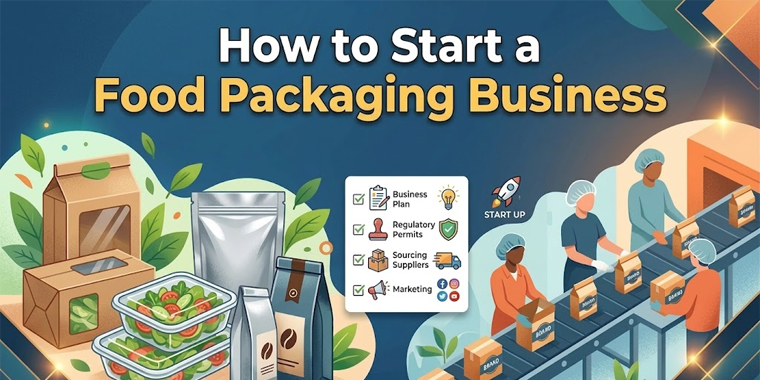
The food business is always on the go. Every day, new brands are introduced, consumers are always searching for convenient items, and companies require dependable packaging solutions to maintain food's freshness, safety, and aesthetic appeal. For this reason, the food packaging industry is expanding annually.
You're looking at a market with a lot of potential if you've been thinking about how to launch a food packaging company. In today's supply chain, food packaging is essential for anything from frozen foods and ready-to-eat meals to dry snacks and coffee beans. The good news? Entering the market doesn't always require a large production facility or millions of dollars.
This guide provides all the practicalities of the process, including research, legal requirements, establishment, and marketing, so you do not have to guess what to do to build your small food packaging business and make a living.
Knowing the basics can help you get off to a good start, whether your goal is to establish a large-scale packaging company or a home-based business.
Why the Food Packaging Industry Is Worth Considering
Fact: The U.S. segment of the food packaging market is expected to grow from USD 118.35 billion in 2025 to USD 205.86 billion by 2035 due to the increasing need for healthy, convenient, functional, and environmentally friendly packaging.
Food packaging is much more than just putting goods in bags or boxes. It guarantees adherence to food safety laws, prolongs shelf life, enables branding, and shields food from contaminants.
Packaging businesses are becoming crucial partners for food manufacturers as customer demand for meal kits, organic products, convenience meals, and online grocery delivery keeps growing.
Because it can be costly to establish an internal packaging business, many startups, neighborhood bakeries, snack manufacturers, and specialty food producers outsource packaging services. This opens doors for business owners who can offer dependable and affordable packaging solutions.
Sustainability = Competitive Advantage
Environmental responsibility is important to today's customers. Numerous companies actively look for sustainability packaging partners who provide:
- Recyclable substances
- Compostable packaging
- Biodegradable solutions
- Reduced plastic options
- Sustainable methods of sourcing
Adopting environmentally friendly packaging options can help you stand out in a crowded market and draw in high-end customers.
How to Start a Food Packaging Business in USA
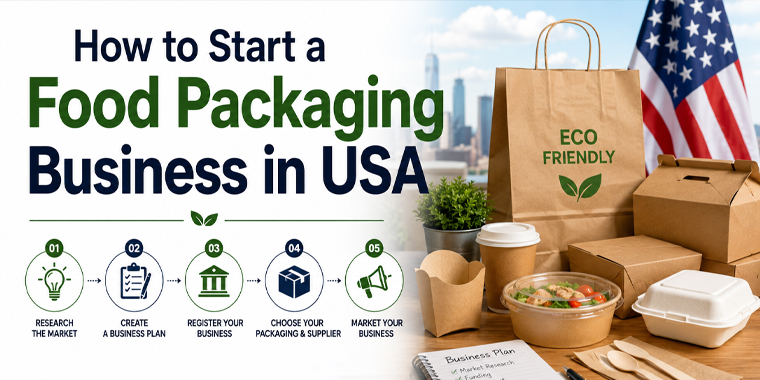
Regulatory compliance should be your top concern if you're looking into how to launch a food packaging company in USA. Because packaging directly affects the health and safety of consumers, the food packaging business is subject to strict regulations.
Here are the key steps:
Step 1: Developing a Compelling Business Plan
Firstly, any successful business is marked by having a direction. So, you must finalize what niche you will target. Will it be a contract packaging of other brands or selling your own line of dry snacks? Also, one must establish target customers - local groceries, online businesses, or wholesalers.
Read More: Contract Packaging: How Co-Packing Services Streamline Production, Reduce Costs & Accelerate Growth
Secondly, project budgets must be within reach. Calculate the monthly revenue of 500-unit runs and include a 3040 margin of material. Both the initial two years of marketing budgets and milestones of growth must be listed. Revenue projection is one of the most important steps!
Finally, decide on a structure and map operations. Well, LLC is the best in terms of liability protection among beginners. Further, decide between B2B and direct-to-consumer sales. Most proprietors rebrand this plan after every quarter since they get to know what sells.
What else must you keep in the list?
- Equipment requirements
- Packaging materials
- Marketing strategy
- Operational workflow
Example: Pack dry products, such as nuts, spices, coffee, granola, or cookies. The reason is that they are simple, as they do not require a fridge. Now, question yourself: Will I prepare my own snacks, or will I be packing on behalf of other people?
Step 2: Handle the Legal Things
On your cottage food regulations, check the standards and compliance rules of your state. The majority allow you to begin at home with dry foods or other snacks with simple paperwork. You need to obtain the relatable basic business license and food handler card. It will take only 2 weeks at max and prevent you from long-term future issues of audit.
Advice: Register your business (LLP is safest and can be done via the internet).
Step 3: Understand FDA Requirements
Packaging materials that come into contact with food must adhere to FDA rules in the United States. You must make sure that:
- Food-safe packaging materials are used.
- Manufacturing procedures respond to hygienic requirements.
- Food items are not contaminated by materials.
This process can be greatly streamlined by working with compliant providers.
Step 4: Set Up Your Workspace
The best idea is to begin at home in your hygienic kitchen (good for a small food packaging business). As you scale, you can rent a small warehouse or kitchen. Or, depending on your requirements, opt for a production facility, a small commercial packaging space, or a large distribution center.
Advice: Adequate storage, sanitary conditions, and quality control practices should be supported by your facilities.
Read More: What is the Production Process of Packaging and Why it Matters?
Step 5: Buy the Basic Tools
A few things will suffice at the outset, including:
- A digital scale
- Filling machines
- A simple heat sealer ($100–$300)
- Vacuum packaging systems
- Digital Printer
- Quality inspection tools
- Labeling equipment
As an add-on (if you got budget), get yourself shrink-wrapping machines and conveyors. Besides, get used machines or small machines in order to save money.
How to Start a Small Food Packaging Business?
Many thriving companies start out modestly!
Prioritize specialty over volume when considering how to launch a small food packaging company. For instance, you may offer packing services for:
- Bakeries nearby
- Trademarks of specialty coffee
- Producers of organic food
- Startups selling health snacks
- Farmers' retailers
Smaller companies require individualized service and adaptable packaging partners, making them a great starting point for newbies. Before growing, you can gain experience and build customer connections by keeping overhead costs low.
Read More: What Are the Colored Dots on Food Packaging Mean? Here's the Truth
Time to Start a Food Packaging Business from Home!
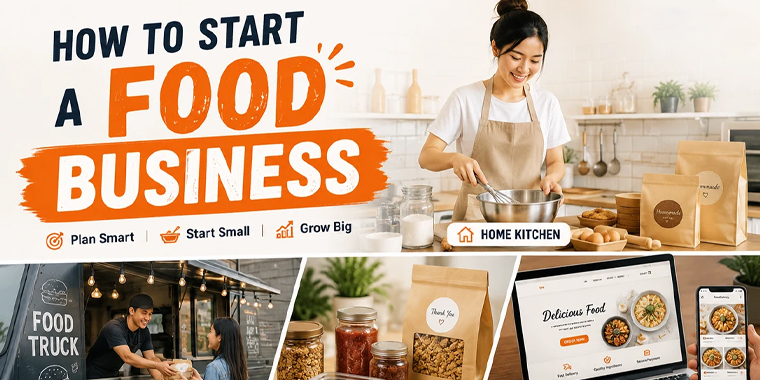
Many entrepreneurs ask whether it's possible to set up a company at home. Well, you must learn how to start a food packaging business from home because it is simple, budget-saving, and result-driven.
- In general, a home-based food packaging business is most successful if you're:
- Repackaging dry goods
- Making personalized labels
- Putting together subscription food boxes
- Providing advisory services for packaging
- Overseeing order fulfillment
Prior to working from home, be sure you:
- Local zoning regulations
- Regulations of the Health Department
- Conditions for licensing
- Certifications for food handling
Strict hygiene regulations, a designated work area, and appropriate storage options are crucial. Before investing in larger facilities, you can test the market and save a significant amount of money by starting from home.
Starting a Dry Food Packaging Business: Essential Steps for Success
Are you confused about how to start a Dry Food Packaging Business?
Dry food products typically include rice, beans, coffee/tea, nuts, spices, and pet treats. Operations are often simpler to handle because these items typically have lower contamination hazards than fresh or chilled foods.
To succeed in creating such retail boxes:
- Select Quality Packaging Materials: Choose materials that protect against moisture, oxygen, UV exposure, and product damage.
- Invest in Reliable Sealing Equipment: Product shelf life is extended, and freshness is preserved with proper sealing.
- Focus on Branding: Packaging design frequently influences consumers' decisions to buy. Clear labeling, eye-catching images, and high-end finishes can all have a big impact on consumer purchasing decisions.
- Build Supplier Relationships: Consistent price and quality are maintained with the support of dependable suppliers. Additionally, scaling your business gets easier as your supply chain gets stronger.
Conclusion
To start a food packaging business, one has to be ready and persistent. You now have the full roadmap that will include market research, regulations, setup options, equipment, design, and growth. Starting a business that deals with packaging dry food at the kitchen table or venturing directly into how to start a business that involves food processing and packaging business with a small plant, the road is easy and lucrative.
It is worth keeping in mind that outstanding custom packaging can be the difference between a good and a great one. Contact the professionals of Custom Design Boxes at 888-385-1812. Our custom-designed food-safe solutions have assisted dozens of start-ups like yours to draw attention and get loyal customers.
The American market is prepared, buyers are in the queue, and your success story can start right away. Don’t let another day pass!

Abdul Waheed
With over a decade of experience in the printing and packaging industry, I’ve dedicated my career to helping brands reshape their identity with creative, sustainable, and cost-effective packaging solutions. Being the CEO of Custom Designs Boxes, my mission is simple: to balance innovation with affordability so businesses of every scale can enjoy premium packaging truly reflecting their vision. When I’m not strategizing for the next big packaging trend, you’ll find me exploring design inspirations, mentoring my team, and building lasting relationships with clients.