Table Of Content
Need a smarter way to make sure that your products are protected during transportation? The easiest and cost-saving solution is honeycomb paper packaging, which also happens to be eco-chic and fully customizable.
First, it is made out of kraft paper, which is durable, biodegradable, and resilient. Second, it is created in a flexible honeycomb design, which cushions your products without the use of plastic. This is how it helps you ship fragile glassware, heavy-duty electronics, and even premium gifts.
We'll go over the supplies, how to build it step-by-step, variations like honeycomb packing paper, and even how honeycomb paper wrap functions in practical settings.
What Does Honeycomb Paper Packaging Mean
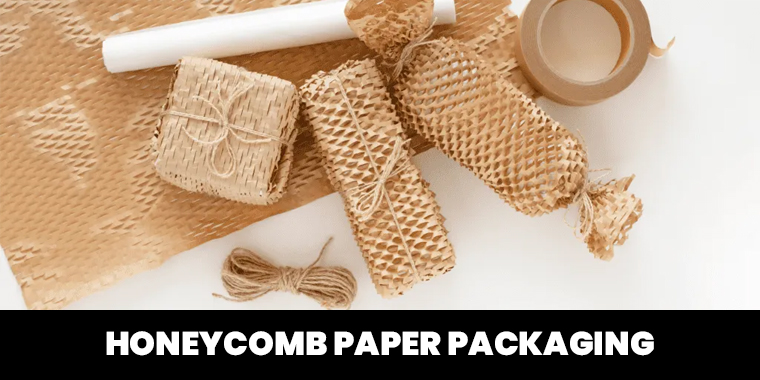
Honeycomb paper packaging is simply defined as “protective yet lightweight wrapping paper composed of kraft and cut into a stretched hexagonal pattern.” This beehive structure expands into a 3D cushion when expanded, and the pressure is evenly distributed.
The special design provides a cushioning effect and promises shock absorption by trapping air. Kiss goodbye to excessive usage of tapes and plastic fillers.
Moreover, it is commonly used for:
- Packing delicate products such as glassware and ceramics.
- Guaranteed product safety during shipping.
- Improving the logistics of e-commerce.
Due to its elasticity and strength, it is now an ideal choice of packaging in the contemporary world. It can serve as a double layer. For instance, wrap the item with honeycomb and then place it inside electronics boxes.
Advantages of Honeycomb Paper Packaging
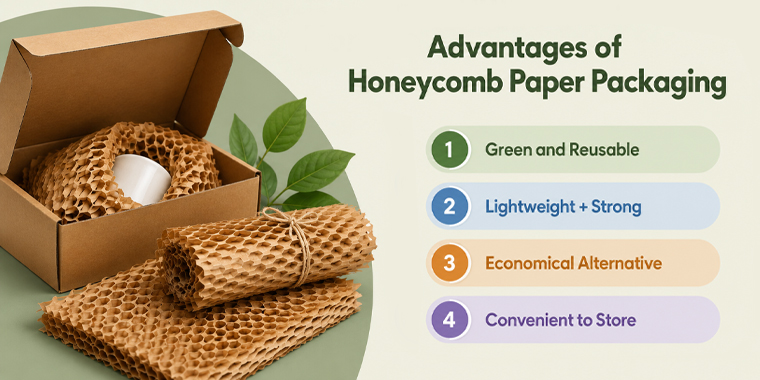
Before jumping into how to make it, here’s why it’s everywhere right now.
Green and Reusable
Honeycomb packaging is manufactured using biodegradable kraft paper, which reduces the use of plastic waste and encourages the achievement of sustainability practices by reducing their carbon footprint. This sustainable packaging can be totally recycled and is in line with the business practices that are “green.” Moreover, it supports circular economy principles by decomposing naturally and leaving no hazardous residue.
Lightweight + Strong
It is lightweight but incredibly resilient and strong. In reality, its hexagonal structure is the reason behind wrapping’s great strength and shock absorption. Think of it as a very solid solution for shielding expensive or delicate goods during transportation, reducing the possibility of damage without adding needless bulk or weight to packaging.
Economical Alternative
It will substitute the high-cost plastic materials, such as bubble wraps, that can be used to save businesses money, and yet protect the product. Businesses gain from savings directly as well as increased operational efficiency in their packaging operations because it is easy to use and demands less storage and handling expenses.
Convenient to Store
Honeycomb paper is stored in compact rolls and is, therefore, convenient to store ( even in limited warehouse spaces). It works without needing special tools or training, allowing quick adoption across packaging teams. Because of its adaptable structure, it is simple to cut, wrap, and apply, increasing workflow speed and cutting down on packaging time during order fulfillment.
Materials Required to Make Honeycomb Paper Packaging
You will require the following materials for the basic version:
- Kraft paper roll or thick recycled paper sheets
- Cutting mat or any flat table/surface
- A cutting tool of your choice (scissors, sharp blade, or rotary cutter)
- Packing tape or adhesive
- Ruler or measuring guide
- Stencil or honeycomb cutting template (very helpful and a must-have)
You must have cardboard sheets and tissue paper to use when needed for reinforcements. Besides, glue can also work for layered versions.
Tip: Your cutting tools must be sharper and more controlled.
Read More: A Complete Guide to Creating an Origami Box with a Lid
How to Make Honeycomb Paper Packaging | Step-by-Step
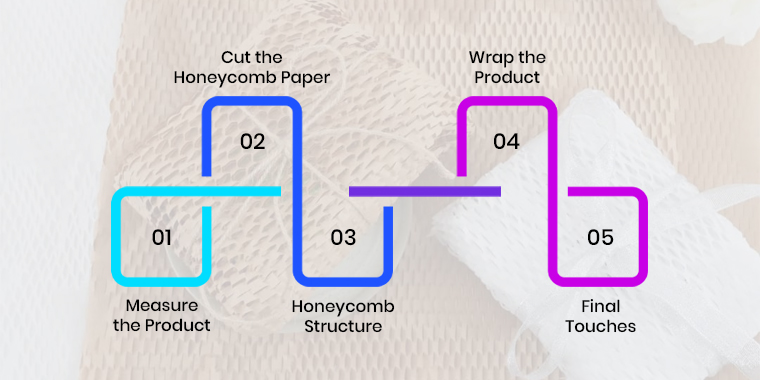
Moving forward from the not-so-fancy industrial tools to making, here are a few steps to explain.
Step 1: Measure the Product
First, get your item/s and wrap them roughly to get an estimate of the total paper required. You must also measure the product dimensions and weight for accuracy. Always leave room for extra covers and cushioning materials.
Step 2: Cut the Honeycomb Paper
Take the roll and arrange your cardboard or kraft paper sheet flat on a clean surface. If you're focusing on how to make honeycomb paper packaging with cardboard, this is where you decide on the thickness. Stronger yet less flexible honeycomb is produced with thicker cardboard. Kraft paper is more flexible and stretchable. Now use a ruler to lightly outline a grid design. Later on, your honeycomb cuts will be guided by this grid.
Pro Tip: First, the edges should be made even to have a clean and professional wrap. Second, consistent spacing is necessary as uneven spacing will lead to uneven expansion.
Step 3: Honeycomb Structure - Cutting & Stretching
- Make alternate diagonal cuts across the paper.
- Avoid cutting through the edges entirely to preserve the structure.
- Until the sheet is completely patterned, keep going in rows.
When done correctly, it won't appear to be much yet. The magic doesn't show up until after expansion. At first, it felt stiff. Then suddenly, it expands. This is very important as the extended structure ensures cushioning and grip. The key here is controlled stretching, so pull evenly and avoid sudden/vibratory motions.
Layering (Optional but Powerful)
Layering is essential for tougher packaging, particularly for delicate items like glass jars or cosmetics. You can:
- Adhere two patterned paper sheets together.
- Carefully align cut patterns; this is of the utmost significance.
- Gently press to create a binding without collapsing the structure.
The honeycomb effect thickens and becomes more shock-absorbing when layered. Also, poor alignment in layered sheets can be a big loophole.
Step 4: Wrap the Product
Put the object at the center of the paper that has been expanded. Or you can place it at one end. Considering the honeycomb structure is self-assembling, the structure locks itself slightly. It means the wrapping holds products snugly with no tape or plastic support.
Tip: Add extra layers if needed for fragile items.
Step 5: Final Touches
Stickers or labels can be added as well to make the branding more presentable. Check the packaging again and make sure that the product is secure and ready to be shipped.
Pro-Level Tips for Better Results
- Accuracy is more important than force.
- To achieve fluid expansion results, make clean incisions.
- Avoid cutting the sheet too much, or else the framework will collapse.
- Test a little version of the sheet before creating the full one.
- The honeycomb opening is guided by light folding.
Honeycomb Paper vs Traditional Packaging
| Feature | Honeycomb Paper Packaging | Bubble Wrap / Plastic Packaging |
| Material | Kraft paper | Plastic |
| Environmental Impact | Eco-friendly, recyclable | Non-biodegradable |
| Cost | Affordable | Can be expensive |
| Protection | Strong and flexible | Good but less sustainable |
| Appearance | Premium and aesthetic | Basic |
This comparison clearly shows why businesses are shifting toward honeycomb solutions.
Applications of Honeycomb Paper Packaging
Are you also questioning where the packaging is used? The Honeycomb paper packaging is very versatile and is successfully replacing bubble wrap in many industries. After all, it feels more premium and aligns with sustainability goals. Here are the most common uses:
- E-commerce shipping boxes
- Luxury kits
- Cosmetic packaging
- Handmade crafts
- Food delivery
- Glass cream jars/candle jars
- Eco-friendly retail packaging
Conclusion
Honeycomb paper packaging is a fascinating yet safe, eco-friendly, and cost-efficient proposal to companies. Not only does it offer protection to products, but it also improves the presentation, as well as minimizing the impact on the environment. Custom Design Boxes can help you design honeycomb packaging in any size and with top-quality kraft.
Moreover, you can consult our team for custom printed boxes, cartons, bags, and pouches that promise the safety of your products and boost your branding. Call 888-385-1812 now and take your first step towards making better, safer, and 100% sustainable packaging solutions.

Abdul Waheed
With over a decade of experience in the printing and packaging industry, I’ve dedicated my career to helping brands reshape their identity with creative, sustainable, and cost-effective packaging solutions. Being the CEO of Custom Designs Boxes, my mission is simple: to balance innovation with affordability so businesses of every scale can enjoy premium packaging truly reflecting their vision. When I’m not strategizing for the next big packaging trend, you’ll find me exploring design inspirations, mentoring my team, and building lasting relationships with clients.