Table Of Content
Have you ever opened a box that seemed of exceptional quality? Not as glossy as plastic! Not as boring as unfinished cardboard! Somewhere in that sweet spot where your fingers go, “oh, this is nice.”
One of packaging's most underappreciated heroes is varnish coating. Unlike foil stamping or embossing, it doesn't shout for attention. Rather, it screams toughness, safety, and luxury. Often, varnish coating is conducting its silent, diligent work, producing that creamy and almost glossy magic.
Let's take a closer look at what varnish coating is, how it functions, and why companies adore it.
What Is Varnish Coating
The basic idea behind varnish coating is to apply a transparent liquid layer on printed packaging to safeguard and improve the surface. Imagine it as a thin barrier that enhances the material's appearance and feel while sealing the ink.
Moreover, varnish is a liquid coat that dries straight onto the surface, as opposed to lamination, which builds a plastic film. Depending on the finish used, it can give luster, velvety feel, or even a subtle matte impression. Subtle yet effective, it protects against discoloration, moisture, fingerprints, and blemishes.
Also Read: Acrylic Coating for Cardboard: The Secret Sauce to Sleek, Durable Packaging
From Liquid to Finish: The Varnish Process
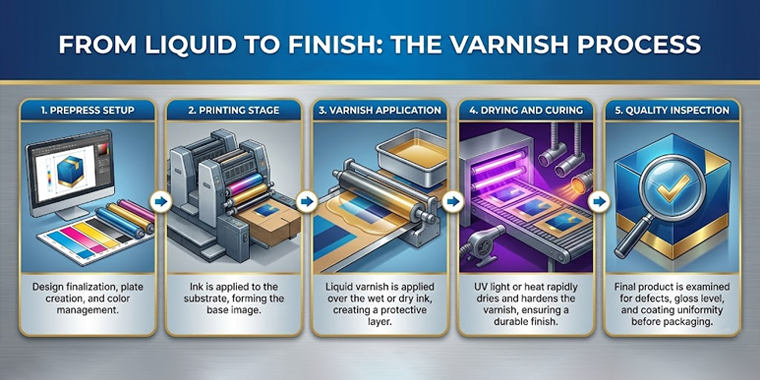
Knowledge about the process of applying varnish coating is useful as it enables brands to pick superior alternatives and discuss the matter with packaging partners effectively.
1. Prepress Setup
Areas on which varnish should be applied are spelled out by designers. The prepress department makes the plates that will be coated, makes sure that they are aligned, and takes care of the technical aspects like trapping and separation.
2. Printing Stage
The image is first printed using digital or offset printing. Besides, varnish can be applied only after the ink is laid.
3. Varnish Application
Varnish is roller-coated, sprinkled, screened, or sprayed. The approach used is based on the texture, finish, and efficiency in production desired.
4. Drying and Curing
Drying of the varnish takes place by UV curing, heat, infrared, or air drying. The selection depends on the type of varnish applied. Moreover, high-gloss finishes are highly likely to be cured with UV.
5. Quality Inspection
Technicians verify the evenness of coating, the consistency of shine, the accuracy of texture, adhesion, and the quality of finish.
6. Conversion
Once dried, sheets are cut and scored, then folded, glued, and assembled into their final box form.
Types of Varnish Coating
The finish or aesthetic impression that the varnish produces on the package surface is referred to as the type. This has to do with touch and appearance—how the coating feels and looks as it dries.
Gloss Varnish
Gloss varnish improves the richness and clarity of colors by providing a shiny surface. Due to the extra brightness, the surface brilliantly reflects various shades of colors evenly to make designs bolder and more saturated. Also, it is perfect for brands desiring attention-seeking retail packaging. The glossy finish provides a smooth finish that prevents fingerprints and fading; thus, it is ideal for cosmetics, tech accessories, and gift boxes.
Matte Varnish
Matte varnish carries a non-reflective coating that is soft and gives a classy, modern look. It lessens glare, conceals fingerprints, and provides boxes with a premium touch. The boutique brands, fashion products, and subscription boxes prefer matte varnish due to their minimalist and understated look.
Satin / Silk Varnish
Wearing a gloss and matte balance, satin varnish (sometimes called silk) has reached a compromise between excessive flashiness and dullness. It offers a smooth finish that does not reflect sharply. Besides, this versatile pick has been popular with several food, beverage, and wellness brands because it has a clean and friendly appearance.
Soft-Touch Varnish
Soft touch varnish brings out a suede vibe that is velvety, yet it sends out an extravagant feeling right away. This tactic experience increases sensuality and improves the unpacking process. In high-end packaging of perfumes, jewelry, gift boxes, and skincare, soft-touch is often prioritized.
Spot Varnish (as a finish style)
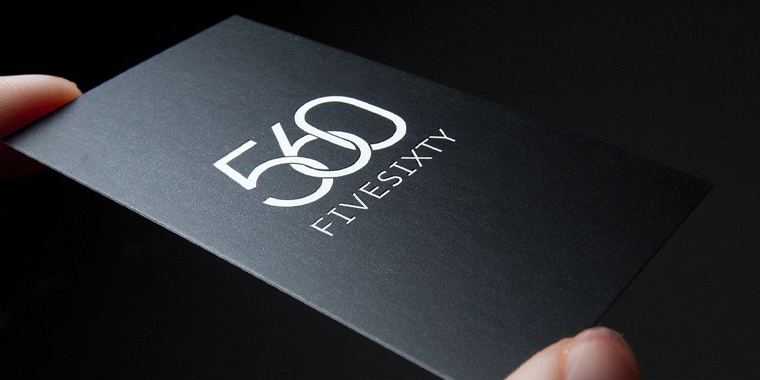
Spot UV is a high-shine coating only done to certain spots, including logos, titles, icons, or design accents. The difference in the matte and gloss gives dramatic depth to the image. This is commonly seen in high-end packaging to create visual focus.
Textured, Raised, and Specialty Varnish
Raised and textured varnishes translate packaging into a multisensory experience. These specialist finishes produce multidimensional surfaces in place of a flat coating, giving the design more grip, tactile interest, and contoured depth. As a result, the product feels crafted rather than manufactured - thanks to packaging that encourages touch and engagement.
Extra-fine specialty varnishes are particularly well-liked for business-forward packaging, exclusive releases, and fancy gift boxes where a lasting impression is important. The box itself becomes a component of the product journey as they turn common surfaces into dynamic ones.
Get a Peek at Tried-and-Tested Coating Techniques
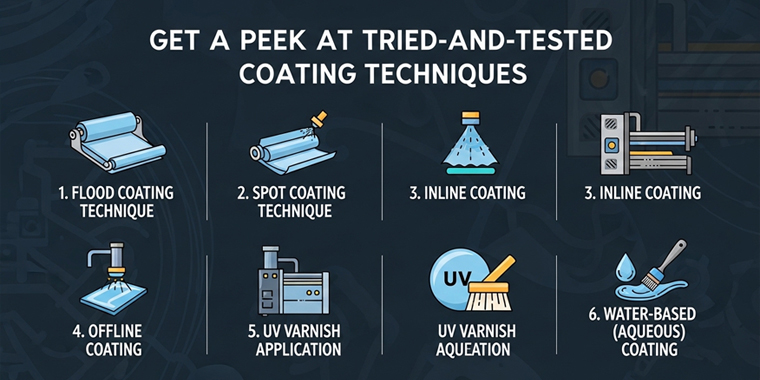
Techniques refer to how the varnish is applied during production. This is about process, equipment, and application method, but not the finish style.
Flood Coating Technique
Varnish is applied uniformly across the whole surface via flood coating. A uniform layer of protection is put on the entire sheet. Because it optimizes durability and coverage, this method is the most popular and effective one. Its goal is to provide uniform aesthetics and full-surface shielding.
Spot Coating Technique
Spot coating uses a printing plate or digital overlay to apply varnish just to specific regions. To be consistent with the printed artwork, it needs to be aligned perfectly. This approach creates texture contrast and highlights focus points of interest, making it ideal for selective augmentation and design emphasis.
Inline Coating
A coating unit integrated inside the press is used for inline varnishing, which takes place during the process of printing. The varnish is put right after the ink printing, and is typical in commercial printing with large volumes. Besides, it speeds up production and minimizes additional handling. Its advantages?
- Quicker turnaround
- Reduced labor expenses
- Workflow efficiency
Offline Coating
After printing, offline varnishing is a distinct final step. Sheets are transferred to a special coating equipment. This enables thicker coatings and more customized finishes that would not be achievable in-line. The benefits include:
- More authority
- Unique impacts
- Greater layers of covering
UV Varnish Application
UV varnish cures instantly by using ultraviolet light (when exposed to UV light, the liquid coating instantly solidifies). This makes the surface extremely glossy and resilient, allowing boxes to be handled or stacked immediately.
Let's talk about its perks:
- Dry instantly
- High resistance against scratches
- Powerful visual effect
Water-Based (Aqueous) Coating
Aqueous varnish is safe for the environment and is based on water. It dries by absorbing into the substrate and evaporating. Although it is not as glossy as UV varnish, it is reusable and offers adequate protection. Advantages:
- Environmentally friendly
- Economical
- Available food-safe choices
Where It Works Best
It applies to both paper-based and board-based media, with brands in various industries being able to make the most out of varnish. Yes, it is particularly popular in commercial printing and is commonly used on:
- Paperboard
- Folding cartons
- Cardboard
- Brochures and inserts
- Corrugated sheets
- Kraft paper
- Rigid box material
- Retail display packaging
- Labels and Stickers
Bonus: Another benefit of varnish for brands striving for sustainability is that, unlike lamination, it does not add plastic film. Along with paper products, several water-based varnishes are more environmentally friendly and simpler to recycle.
Why Varnish-Coated Packaging Is Worth the Upgrade
Remember, coated packaging is more luxurious and pricey. Here are the primary benefits and uses:
1. Protection:
Functionally, it protects the printed surfaces against the daily risks of scuffs, abrasions, cracks, fading, and moisture while getting stacked, shipped, handled, squeezed, and displayed under bright lights. Surprisingly, it prevents ink from rubbing off.
2. Visual Enhancement:
On the visual front, the coating of varnish makes the palette richer and more defined. Moreover, it brings a graceful appearance to the surface - shiny, subtle, velvety. Lastly, customers' perceptions of quality are influenced by that tactile enhancement.
3. Faster + Economical
This is less expensive than lamination while providing both aesthetic appeal and protection without appreciably raising production costs.
Read More: Coated Paper: Uses, Types, and Benefits for Modern Printing
Application in Custom Packaging
Varnish applications can be found almost everywhere in every field where presentation and protection are important. Irrespective of the industry, packaging can be strengthened, made more appealing, and memorable with the varnish coating.
- Custom retail packaging: Builds up branding, protects products, and improves product presentation with customized designs.
- Cosmetics and beauty boxes: Use high-end packaging to convey personality while securely keeping cosmetics.
- Food and beverage packaging: Promises customer safety, freshness, and aesthetic appeal.
- Accessory and technology device boxes: Hold devices and accessories safely while promoting a high-quality image.
- Pharmaceutical packaging: Preserves pharmaceuticals, keeps things hygienic, and clearly conveys important usage instructions.
- Apparel and gift boxes: Present gifts and clothes in a stylish manner while keeping the contents safe and well-organized.
- Subscription boxes: Provide memorable branding experiences and guarantee the safe delivery of carefully chosen products.
- E-commerce mailers: Protect transported items, lower the chance of damage, and retain integrity while in transit.
Understanding Important Technical Terms
These are the terms that assist the brands in communicating better in case they are ordering custom packaging.
|
Term |
Meaning |
| Viscosity | How evenly the varnish flows during application depends on its level of thickness or flow resistance. |
| Curing | Varnish dries and solidifies into a barrier of protection during this process. |
| Adhesion | The varnish's capacity to adhere to the packaging surface and form a strong connection. |
| Spot Coating | A varnish application method in which only specific design sections receive the coating. |
| Gloss level | Measured reflectivity of the surface |
| Rub resistance | Ability to withstand friction |
| Coating Weight | The thickness or quantity of varnish that is applied to the surface. |
Glossify Your Packaging With the Varnish Coating
Knowing what varnish coating is will let brands make smart and beneficial choices that will increase the durability of products as well as improve the experience of customers. Varnish coating is a strong option that can be used to amplify the packaging, whether you desire glossy color, a matte touch, tactile proofs, or excellent spot UV effects.
To have high-quality packaging with a coating of varnish, contact Custom Design Boxes (888-385-1812). We will offer the experience and finishing quality your brand would love! With us, you get free design assistance, shipping, and 3D mockups.
Frequently Asked Questions
We’re confident that you will love our products and service.

Abdul Waheed
With over a decade of experience in the printing and packaging industry, I’ve dedicated my career to helping brands reshape their identity with creative, sustainable, and cost-effective packaging solutions. Being the CEO of Custom Designs Boxes, my mission is simple: to balance innovation with affordability so businesses of every scale can enjoy premium packaging truly reflecting their vision. When I’m not strategizing for the next big packaging trend, you’ll find me exploring design inspirations, mentoring my team, and building lasting relationships with clients.