Table Of Content
When it comes to deciding what kind of packaging material to use, the manufacturers and brands should learn the distinction between PVC and PET.
PET (Polyethylene Terephthalate) and PVC (Polyvinyl Chloride) are amongst the most popular plastics. In fact, these are quietly dominating the packaging world. Despite looking similar, they differ in their applications, performance, benefits, and most importantly, safety profile.
This guide will talk about everything, including their durability, cons, cost, and environmental impact. Understanding of these peculiarities will help you make a decision that will be in the best interest of your brand and your customers.
What is PVC?
PVC or Polyvinyl Chloride is an all-purpose plastic. Also, it is one of the oldest synthetic plastics, mostly utilized in the packaging industry owing to its remarkable strength, versatility, chemical resistance, and capacity to shape into either flexible or rigid sheets. Moreover, the PVC has the following key characteristics:
- Economical for large-scale brands.
- Greatly protective in nature; offers a strong structural support.
- Despite being flexible, its rigidity is unparalleled.
- Resistant to moisture.
- Can be thermoformed easily
- Easy to print, hence suited for branded and custom-printed packaging.
- Good clarity for product visibility.
The low cost and bending properties of PVC render it a solution for products that demand a higher level of protection, die-cut contour shapes, and true-to-fit dimensions.
The most awful thing is that it includes chlorine, which, if burnt or disposed of improperly, can discharge toxic chemicals.
Packaging Uses
- Blister pharma packaging
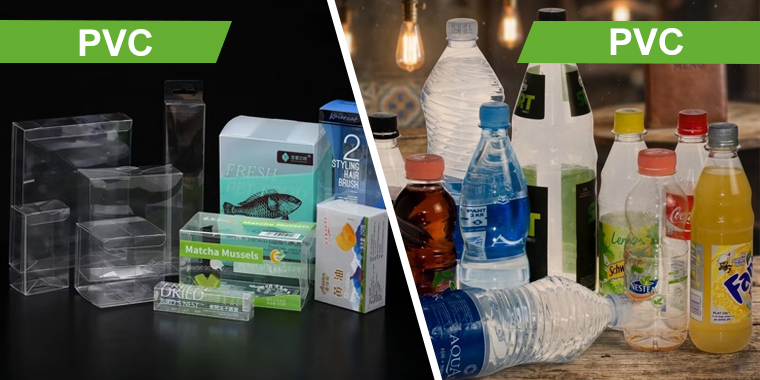
- Clamshell boxes (for electronics and retail goods)
- Shrink wrap films
- Plastic sleeves and labels
- Protective product casings
What is PET?
PET, or Polyethylene Terephthalate, is best defined as a lightweight and transparent plastic. Most importantly, it is one of the most recycled plastics in the world. Also, it is prized for boasting the maximum clarity, chemical resistance, and a protective barrier. By barrier means, it protects the packed items from water, humidity, sunlight, heat, and contaminants to maintain freshness and potency.
- What makes this plastic a choice for modern brands?
- Food-safe composition, making it suitable for edibles.
- Has not only transparency but also a gloss.
- Good barrier against gases, too.
- Incredibly recyclable, posing less environmental impact.
- Known for being a strong option.
Packaging Uses
- Beverage Bottles (for water, juices, and carbonated drinks),
- Food-grade Boxes (containers and trays for ready-to-eat foods).
- Cosmetic packaging.
- Packaging of household goods.
PVC vs PET: The Core Differences

The main distinction between PVC and PET is based on the chemical composition, environmental impact, and performance properties:
1. Chemical Composition: CHLORINE!
Chlorine is a component of PVC's chemical constitution, which gives it durability but also poses risks to the environment. In contrast, PET is more commonly used in recycling programs since it is composed of ethylene glycol and terephthalic acid.
Winner: PET (more eco-friendly)
2. Environmental Impact
PVC can be challenging to recycle. Also, one of the most recycled polymers in the world is PET, which is frequently used to make new bottles, fibres, and packaging materials.
Winner: PET
3. Clarity and Appearance
Although both materials can be clear, PET typically provides superior gloss, sheen, and optical clarity, giving things a more upscale appearance on shelves. PVC still offers good transparency, although depending on the formulation, it could have a faint blue hue.
Winner: PET
4. Durability and Strength
PVC is renowned for being incredibly durable and inflexible. It is very resistant to impact, oils, and chemicals. Although PET is also strong, its greatest benefit is that it adds strength without increasing weight.
Winner: Tie (depends on application).
5. Safety for Food Packaging
It is commonly acknowledged that PET is safe for use in food and beverage packaging. Although PVC can be used in culinary applications, it is typically avoided in many areas because of worries about plasticizers and additives.
Winner: PET
6. Cost Efficiency
PVC is still commonly utilized in some packaging since it is often less expensive to produce. Although PET may be slightly more expensive, it can often be a better long-term investment due to its recyclability and safety.
Winner: PVC (in terms of raw cost)
Alternative Packaging Plastics
Most of the packaging choices are composed of PVC and PET, but other types of plastics that are quite common are:
|
Plastic Type |
Key Properties | Common Packaging Applications |
| Polypropylene (PP) | Lightweight, heat-resistant, high-strength, and multi-purpose | Bottle caps, yogurt containers, takeaway food packaging, and flexible films |
| High-Density Polyethylene (HDPE) | Strong, moisture-proof, non-corrosive, and sustainable | Milk jugs, detergent bottles, shampoo bottles, and industrial containers |
| Low-Density Polyethylene (LDPE) | Soft + flexible, light, and moisture-proof | Plastic bags, liners, squeeze bottles, and shrink films |
| Polystyrene (PS) | Lightweight, rigid or foamed, and impressive insulation characteristics | Disposable cups, food trays, protective packaging inserts |
| Expanded Polystyrene (EPS) | High-level cushioning, shock-absorbing, and lightweight | Protective packaging, electronics packaging, food containers |
| Polycarbonate (PC) | Durable, transparent, and impact-resistant | Reusable food containers, beverage bottles, protective packaging |
|
Polyamide (Nylon) |
Strong, flexible, and high barrier against oxygen + moisture | Vacuum packaging, meat packaging films, and multilayer food packaging |
| PLA (Polylactic Acid) | Biodegradable, plant-based plastic, and eco-friendly | Compostable food containers, cups, and fresh produce packaging |
Advantages of Selecting the Appropriate Plastic
Various polymers have special qualities like heat and moisture resistance, elasticity, strength, and clarity. Brands can support cost-effectiveness and sustainability objectives while simultaneously improving packaging performance by selecting the appropriate material.
Cost-Effectiveness and Production Comfort
The selection of the right material will minimize waste, streamline production, and control the quality. PVC is affordable when production is large in volume, whereas PET will minimize the returns on products because of the lesser risks of breakage.
Sustainability Reflections
PET is highly recyclable, which provides brands with a competitive advantage in the recyclability of packaging. PVC is cheaper, however, less environmentally friendly, and can be recycled partially. The brands need to balance between cost and sustainability objectives.
Consumer Attraction and Branding
PET is highly transparent; your product is going to shine. And, PVC has the advantage of being flexible when it comes to designing shapes and embossing, boosting brand awareness. Remember, the packaging that corresponds to the value of the product generates consumer trust.
Read More: Top 9 Ways to Draw the Attention of Prospective Customers to Your Brand
Brands and Manufacturers' Advice on Choosing the Right Plastic
- Identify product requirements, such as fragility, visibility, and protection needs.
- Consider sustainability packaging goals, as many brands now prioritize eco-friendly packaging.
- Test material compatibility before full-scale production to ensure proper product fit, barrier performance, and high-quality print results.
- Ensure the selected plastic meets food safety and chemical regulations.
Conclusion
The distinction between PVC and PET is crucial to the manufacturers and brands that wish to have packaging that will be cost-effective and, at the same time, be attractive to consumers.
Although PVC is less expensive and more flexible, PET is easy to use in terms of clarity, strength, and durability. Critical assessment of product needs, branding objectives, and environmental concerns is a sure way of making the correct decision in the long run. Through intelligent selection, the manufacturers will be able to offer better products and will make their brand appear even more valuable and environmentally friendly.
To have a specific direction, call Custom Design Boxes at 888-385-1812 and make your own package shine in the current competitive world.
Frequently Asked Questions
We’re confident that you will love our products and service.

Abdul Waheed
With over a decade of experience in the printing and packaging industry, I’ve dedicated my career to helping brands reshape their identity with creative, sustainable, and cost-effective packaging solutions. Being the CEO of Custom Designs Boxes, my mission is simple: to balance innovation with affordability so businesses of every scale can enjoy premium packaging truly reflecting their vision. When I’m not strategizing for the next big packaging trend, you’ll find me exploring design inspirations, mentoring my team, and building lasting relationships with clients.