Table Of Content
Moisture stays out when cardboard gets a wax shield. Strength goes up because the material resists pressure, scratches, and smudges better. Protection improves during shipping due to more efficient barriers against UV, humidity, and dust.
The silent foundation of the packaging industry has always been cardboard. It is inexpensive, lightweight, recyclable, and incredibly adaptable. However, basic cardboard begins to falter when things get actually messy. This is when the cardboard box wax coating comes into play and totally alters the situation.
Testing shows fewer failures under pressure, and cold storage environments highlight performance gaps between coated and uncoated types. Moreover, shipping of food items often demands wax-coated cardboard, as moisture and water threaten the contents. There can be a slight jump in costs, but it is balanced through reduced returns and minimal losses.
What is Wax Coating on Cardboard?
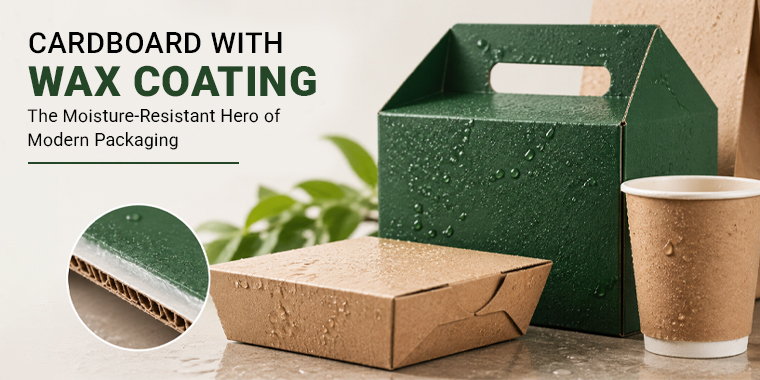
A thin film of wax, usually paraffin or a similar food-safe wax, is put on cardboard boxes that efficiently guard the structure against moisture, grease, and rough handling. In simpler words, cardboard simply shrugs it off rather than absorbing water, oil, dust, or humidity like a sponge.
Wax-coated cardboard has persisted despite the availability of modern packing methods, and for good reason. After all, it is more durable, more economical, and more environmentally friendly than plastic, while being adaptable to serve a variety of industries. Fortunately, it works without overcomplicating things.
How Does It Work?
Wax is heated until it flows like water before applying on the cardboard. Once it is layered on the material, wax slips deep inside the fibers instead of sitting outside. Because of this quiet shift beneath the surface, the box gains toughness. After cooling, wax blocks tiny holes in the paperboard from where moisture might sneak through.
Advantages of Wax-Coated Cardboard
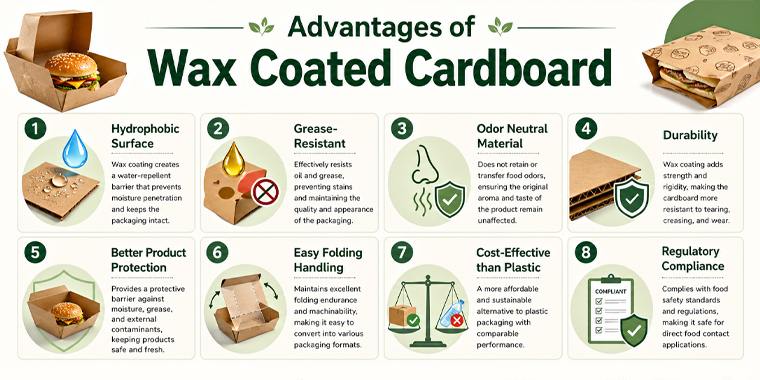
Knowing what features are offered makes it easier to judge if wax coating works for your packaging needs.
1. Hydrophobic Surface
This is the headline feature.
Water struggles to seep in as wax blocks the tiny holes in fibers and creates a barrier to promise no structural failure. Therefore, the box won't collapse even if it is placed on ice, in a steamy warehouse, or close to products that are prone to condensation.
2. Grease-Resistant
Ever seen a pizza box turn oily and weak? With a wax coating, oil and food grease stay on the outside. Yes, this slick finish keeps gunk from soaking through food boxes. Surely the best option for fried items. On the other hand, it is good for packaging, shipping, or storing industrial parts that leak oils or fats.
3. Odor Neutral Material
The smell stays away. The wax used is made for food, so it carries no scent and leaves no flavor either. It touches food without changing anything.
4. Durability
Stronger boxes mean higher stacking in trucks and warehouses, ultimately increasing volumetric efficiency and cutting freight costs.
Such boxes handle pressure far better than regular ones. Even piled high, it resists crushing for longer, giving packaging a longer lifespan. Wax coating helps reduce tearing, softening, and warping. Surprisingly, frost won’t make it crack. It stays flexible even at –20°C. Cold storage? Handle that without falling apart.
5. Better Product Protection
It's easy math: the product inside remains protected when the package is sturdy. For perishable goods and delicate industrial components, where even small damage might result in loss, this becomes essential.
Products are always delivered to consumers undamaged, fresh, and completely dependable because of sturdy materials, appropriate design, and tight sealing.
6. Easy Folding Handling
Folding treated shipping boxes is a breeze since the wax coating helps hold clean lines when scored. Cuts go smoothly without needing advanced tools or extra gear.
7. Cost-Effective than Plastic
A major benefit is that wax-coated cardboard provides moisture resistance without requiring a complete transition to plastic packaging. It is less expensive than premium coated composites and less harmful to the environment than packaging that uses a lot of plastic (simpler disposal in many situations).
8. Regulatory Compliance
Regulatory compliance guarantees that food-grade wax formulations satisfy USDA produce packaging criteria as well as FDA and EU food contact material regulations. Wax-coated cardboard is appropriate for direct food contact, fresh produce storage, and international distribution throughout retail and industrial supply chain industries due to these criteria, which ensure safety, nontoxicity, and dependable barrier performance.
9. Lightweight Structure
Coating secures goods without increasing needless bulk or freight costs, improving supply networks' overall performance and efficiency. It is perfect for large-scale distribution of display boxes and e-commerce logistics due to its low weight and durability.
10. Flexible Coating Options
This can be customized according to budget and packaging requirements.
- Full coating is perfect for high-risk products since it provides the highest level of moisture and grease protection.
- A well-rounded and economical solution is provided by partial coating.
- Spot coating focuses on particular regions, providing protection only where it is required while maintaining the material's general affordability and light weight.
Applications of Wax-Coated Packaging
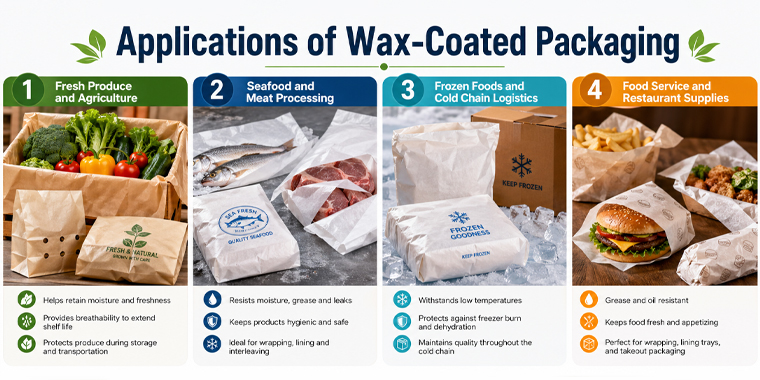
A thin layer of wax does more than just shine things up. Where dampness lingers or frost creeps in during early shifts, the wax holds the cardboard firmly. Not limited to one corner of manufacturing or storage. Even in chilly air that bites at joints and seals, it stays effective. Cold rooms, outdoor setups, and shipping containers, a waxy barrier cuts through those issues.
Fresh Produce and Agriculture
Morning dew isn’t kind to paper boxes. Melted ice drips slowly through stacked crates, while cold trailers leave puddles on the walls. Ordinary cartons will soften fast under such damp weight. Boxes sealed with wax hold firm where others sag and split. Moreover, corrugated boxes and trays sealed with paraffin resist soak-through longer than any substitute found so far.
Seafood and Meat Processing
Frozen droplets, red fluid, salty spills - these overwhelm regular boxes fast. Boxes must shrug off damp like a winter coat sheds snow. Through freezer rooms, trucks, and store freezers, treated cardboard packaging holds shape.
Soggy corners? Gone. Weak seams? Not here. The material fights wetness like roots grip soil.
Frozen Foods and Cold Chain Logistics
When items shift between cold storage and room air, moisture builds up fast on boxes. Instead of falling apart, wax-sealed cardboard survives repeated freezing and warming.
Read More: Wax Coating: The Secret To Keeping Food Fresh
Food Service and Restaurant Supplies
Fresh deliveries arrive stacked in big cardboard cases at busy cooking spots. Steam rises while grease hangs in the air, day after day. Those shiny wax-coated containers keep goods safe through every mile of travel. A great solution to keep boxes sturdy even when things get cold, wet, or greasy.
Industrial & Mechanical Parts
Wax-coated boxes are used by manufacturers and factories for:
- Metal components
- Machine parts
- Automobile equipment
These things tend to remain in humid conditions or covered in oils. During storage and transit, the wax coating keeps the box from becoming wet or deteriorating.
Retail Boxes and Point of Sale Displays
Floor displays made of cardboard sometimes get coated in wax, oddly enough. If these stands sit close to cold cases or out in open-air markets, the wax keeps them from drooping. Without it, they might buckle and fall apart after just hours.
Wax Coating vs. the Alternatives | An Honest Comparison
Wax is not the only moisture-protection option for cardboard, but also the smartest one for specific use cases. Here is how it stacks up against the main competitors, such as silicon coating, across the metrics that purchasing managers actually care about.
| Performance Metric | Wax-Coated Cardboard | Silicone-Coated Board | Plastic-Laminated Box | Untreated Corrugated |
| Moisture Resistance | ✓ High | ✓ Very High | ✓ High | ✗ None |
| Compression Strength (Wet) | ✓ Excellent | ✓ Excellent | ~ Good | ✗ Poor |
| Cold Chain Suitability | ✓ Yes | ✓ Yes | ~ Limited | ✗ No |
| Heat Resistance | ✗ Melts >60°C | ✓ Up to 250°C | ~ Moderate | ✗ None |
| Food Safety / FDA Compliant | ✓ Yes | ✓ Yes | ~ Varies | ✓ Yes |
| Recyclability | ✗ Difficult | ✓ Yes (base) | ✗ No | ✓ Yes |
| Non-Stick / Release Surface | ~ Partial | ✓ Excellent | ✗ No | ✗ No |
| Cost Per Unit | ✓ Low–Medium | ~ Medium–High | ✗ High | ✓ Lowest |
| Printability | ~ Limited | ✓ Excellent | ✓ Good | ✓ Excellent |
Conclusion
For more than 100 years, wax layers have kept cardboard boxes safe from dampness and falling apart. At its cost level, nothing else holds up as well under cold conditions while keeping box strength and meeting food-safety rules just like this one does.
Wax still sets the standard when it comes to fresh fruits, fish, icy meals, or anything moving through chilled supply routes. Even though newer wraps made with silicon-based formulas push limits in heat resistance and reuse cycles, they haven’t overtaken the old favorite. Instead of replacing it, modern options line up beside it, trying to match its mark.
Does it matter who helps you get the details right? Yes, and that is why our company steps into that role. Custom Design Boxes handle what others miss.

Abdul Waheed
With over a decade of experience in the printing and packaging industry, I’ve dedicated my career to helping brands reshape their identity with creative, sustainable, and cost-effective packaging solutions. Being the CEO of Custom Designs Boxes, my mission is simple: to balance innovation with affordability so businesses of every scale can enjoy premium packaging truly reflecting their vision. When I’m not strategizing for the next big packaging trend, you’ll find me exploring design inspirations, mentoring my team, and building lasting relationships with clients.