Table Of Content
Are you a seasoned collector of sports cards, a seller, or just starting to develop a new interest? Ready to submit a vintage Mickey Mantle card to PSA? From storage and display to grading and trading, understanding the exact baseball card size is paramount. After all, they follow a very precise standard, but variations exist across eras, brands, and sports.
Shockingly, even a fraction of an inch can mean the difference between a PSA 10 gem and a rejected submission. You must be wondering now what are the dimensions of a baseball card, and why these measurements matter so much. This guide will explore everything about baseball card sizes, PSA grading card size requirements, and how NBA card size in cm compares.
Remember, grading companies like PSA, Beckett, and SGC have strict card grading dimensions that must be met.
Standard Baseball Card Sizes
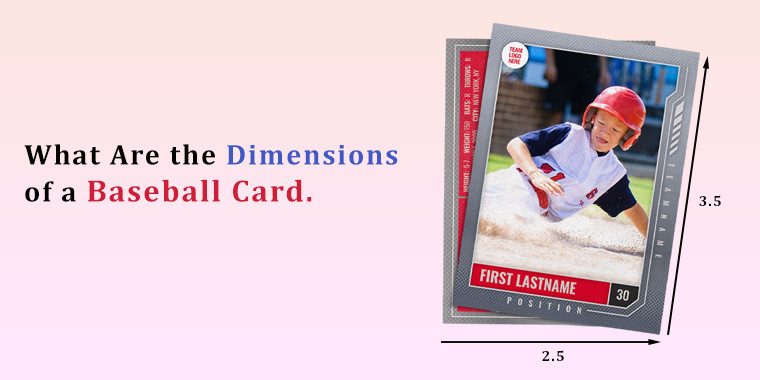
The official baseball card size recognized by many manufacturers and grading companies since the late 1950s is:
- In inches: 2.5" x 3.5"
- In centimeters: 6.35 cm × 8.89 cm
This size holds up an obvious reason. That is “consistent packaging” that makes storage and packing easier. Yes, this exact size is taken into account whenever designing binders, protective sleeves, top loaders, magnetic cases, and grading slabs. To provide cross-sport consistency, identical measurements are used by the overwhelming majority of manufacturers, storage makers, grading companies, and hobbyists of modern baseball trading cards, including:
- Topps
- NBA
- NFL
- NHL (trading cards)
- Upper Deck
- Panini (for their flagship products)
- Modern Pokémon
Modern vs. Vintage | History of Baseball Trading Card Dimensions
While modern cards follow the 2.5 × 3.5 rule, older cards vary:
- Vintage Baseball Card Sizes
- T206 (early 1900s): approx. 1.375" × 2.625"
- Goudey (1930s): approx. 2.375" × 2.875"
- Bowman (1940s–50s): many sets used 2.1" × 2.5" or similar
- Topps (1951): small "Red/Blue Back" cards ~2" × 2.6."
It wasn’t until the mid-1950s that Topps standardized the modern size.
What About Custom or Unlicensed Baseball Cards?
Unlicensed custom cards might occasionally differ from normal dimensions when found on Etsy or in hobby shops. Even while collecting them is enjoyable:
- They could not fit ordinary sleeves.
- Grading companies might reject them.
- Frequently carries an incredibly low market value.
- Matter even in personal printing projects.
A Quick Look into Topps Baseball Card Dimensions
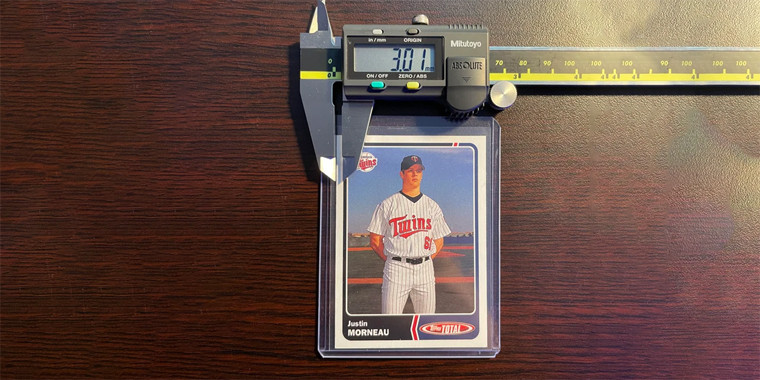
Topps is the dominant brand in determining a baseball card size and has been using the standard 2.5" × 3.5" for all its flagship sets since 1957. You can say it's true for:
- Topps Heritage
- Stadium Club
- Topps Series 1 & 2
- Topps Chrome
- Archives
- Bowman Baseball & Chrome
- Allen & Ginter
Yes, there are a few exceptions that are worth mentioning…
Typically measuring 1.5" by 2.5", mini cards are small, valuable, and adored for their affordable appeal. They are ideal for character-focused or specialty releases. Then there are the classic Topps BIG (1988) cards, which are 2.625" × 3.75" in size and provide more visual room for statistics and artwork without being overly large.
Oversized inserts, such as those in Topps Transcendent, can extend up to 4" × 6" for marketers seeking a dramatic, high-end reveal. Also, this allows designers to show off intricate designs, foil treatments, or autographs. Collectors who value diversity, rarity, and exceptional presentation across several trading card styles are catered to by these formats taken together.
Card Grading Dimensions: PSA vs. Beckett vs. SGC
Grading companies enforce strict card grading dimensions to ensure authenticity and consistency. Each grading company has its own tolerance rules for card dimensions. Even minor trimming or warping can lead to rejection or “Authentic” (no grade) labels. Here’s how PSA, Beckett, and SGC handle size standards.
|
Grading Companies |
Accepted Size Tolerance | Notes |
| PSA | Must be within ±0.015" of 2.5" × 3.5" | Cards outside this range may be labeled “Authentic” or rejected |
| Beckett (BGS) | Similar tolerance measures the corner alignment | Trimming = automatic “Authentic” or qualifier |
| SGC | Allows slight vintage variance (e.g., 1952 Topps) | But modern cards must match the standard size |
PSA Grading Card Size Requirements
Professional Sports Authenticator (PSA) accepts standard cards around:
- 2.5" × 3.5"
- Maximum thickness: around 55 points (depending on the type of slab)
- Dimensional tolerance: very small; cards significantly undersized or oversized can get rejected upon showing signs of miscutting or trimming.
Beckett (BGS/BVG) Card Grading Dimensions
Beckett Grading Services accepts:
- Standard 2.5" × 3.5" cards
- Thick memorabilia cards
- Vintage cards with slight size differences
Additionally, Beckett uses thicker slabs for relic and patch cards.
SGC Grading Card Size Requirements
For many years, SGC has been a reliable grader for old cards, many of which have unusual sizes. Like Beckett and PSA, they point out odd sizing or cutting. Their holders make room for:
- Contemporary 2.5" × 3.5" cards
- Mini cards from before the war
- Tobacco and goudey proportions
Oversized, Mini, and Non-Standard Baseball Card Sizes
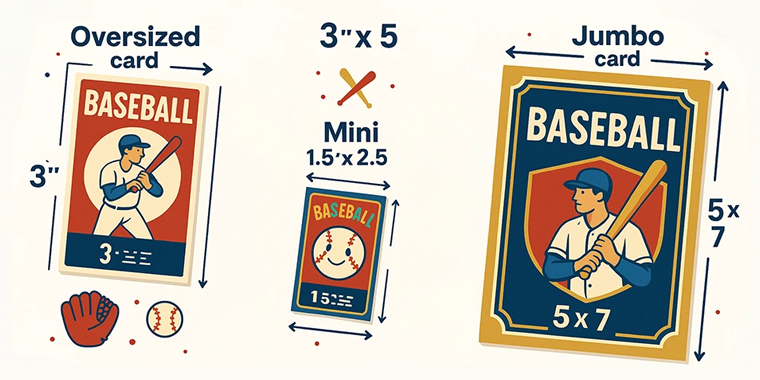
Although the pastime is dominated by the standard size, card brands often provide special designs to stand out:
- Chromium or Die-Cut Cards: They are distinguished by characteristic edges, cuts, or layouts, although they still have the typical 2.5" × 3.5" footprint. This size is best suited for sleeves or holders.
- Oversized Box Toppers: For the delight of collectors, these unique inserts are put on top of hobby boxes. They come in a wide range of sizes, from big poster-like shapes to 4" × 6" postcard-style pieces, which are perfect for exhibition but not always binder-friendly.
- Mini Cards: The delightful, retro vibe of the T206 era is replicated with mini cards. Usually measuring around 1.5" × 2.75", they are popular in sets like Allen & Ginter and Gipsy Queen. They are entertaining, collectible, and a little more difficult to store than regular cards.
- Jumbo Cards: Typically, jumbo cards are 5" × 7" or bigger. They are more of a novelty collectible because they are fascinating display items that aren't graded by every business.
How to Measure Your Baseball Cards Correctly
To check if your card meets the official baseball card size or grading standards:
- Use a ruler or digital caliper (the latter ensures high-end accuracy).
- Measure the width and height
- Compare your recorder numbers to the standard baseball card size (2.5” x 3.5”).
If you’re submitting for grading, ensure the card fits within PSA’s or Beckett’s size guidelines and accepted size tolerances.
Baseball Ball Card Thickness
Grading companies also assess card thickness and flatness—not just length/width. Moreover, thickness determines which top loader or magnetic case you’ll need.
- Standard base card: 20–24 pt
- Chrome cards: 24–35 pt
- Memorabilia/patch cards: 75–180 pt
- Booklet cards: up to 360 pt
Conclusion
The official baseball card size of 2.5 × 3.5 inches (6.35 × 8.89 cm) is more than just a number. It’s a critical factor in grading. Moreover, understanding PSA grading card size requirements and card grading dimensions ensures your cards stay valuable and protected. Keep these measurements in mind and measure before buying, selling, or submitting your cards for grading.
For custom baseball boxes and sport cards designed in ideal dimensions or custom measurements that always match industry standards while keeping your cards secure, reach out to Custom Designs Boxes. Ring us at 888-385-1812 or shoot an email to sales@customdesignsboxes.com.
Frequently Asked Questions
We’re confident that you will love our products and service.

Abdul Waheed
With over a decade of experience in the printing and packaging industry, I’ve dedicated my career to helping brands reshape their identity with creative, sustainable, and cost-effective packaging solutions. Being the CEO of Custom Designs Boxes, my mission is simple: to balance innovation with affordability so businesses of every scale can enjoy premium packaging truly reflecting their vision. When I’m not strategizing for the next big packaging trend, you’ll find me exploring design inspirations, mentoring my team, and building lasting relationships with clients.