Table Of Content
Have you ever unpacked a box filled with Styrofoam loose fill? You know the frustration that comes with it. What's the greener solution? None other than dissolvable packing peanuts—made from biogenic materials. How? It vanishes in water in no time. But are they safe? Can you really dissolve them in your sink? Are they edible? So many questions. No problem.
This guide will answer these questions and discuss this alternative to Styrofoam packing peanuts. You will learn how they are made, ways to use them, and how peanuts can be disposed of.
What Makes Packing Peanuts Dissolvable?
Dissolving packing peanuts are made from natural starches - all renewable, plant-based sources. The most common materials are cornstarch and potato or wheat starch, which:
- Are biodegradable and compostable
- Contain no toxic chemicals or plastics
- Dissolve completely in water
- Leave zero microplastic residue
Why Businesses Are Switching to Dissolvable Peanuts
More and more eco-conscious brands and online retailers are turning to dissolvable packing peanuts as part of their sustainable packaging strategies. These peanuts not only help reduce a company’s carbon footprint but also enhance the overall customer experience.
By using biodegradable loose fill, businesses show their commitment to the environment, which significantly improves brand perception among green-minded consumers. The easy disposal process adds another layer of convenience for customers, making unboxing smoother and more enjoyable.
Additionally, adopting eco-friendly materials helps companies comply with modern sustainability regulations and policies. In short, switching to dissolvable packing peanuts isn’t just a step toward a greener planet—it’s also a smart move for brand reputation and long-term business growth.
How Do Water-Soluble Packing Peanuts Work
These innovative peanuts act as loose-fill packaging materials that provide void-fill protection, cushioning, and shock absorption — much like their polystyrene counterparts.
Take a look at their key properties that help them perform better:
- Lightweight yet shock-absorbent
- Anti-static
- Dissolve instantly in water. No disposal needed
- Positive eco Impact
A single batch of cornstarch packing peanuts decomposes in just 2–4 weeks in a compost bin.
Ways to Use & Dispose of Dissolvable Packing Peanuts
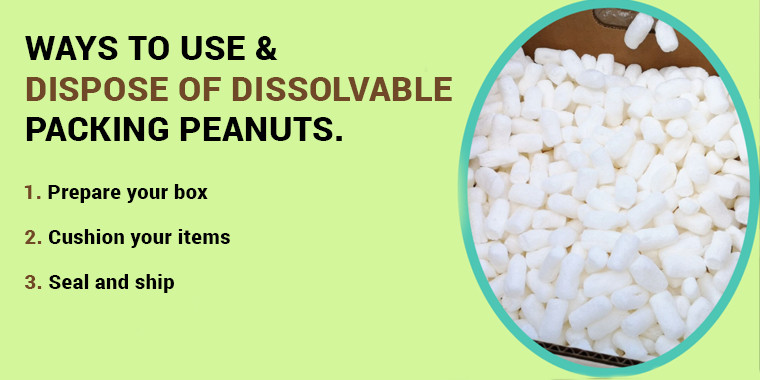
Soluble foam peanuts are easy to use. Even easier to get rid of. Here’s how to make the most of them.
To use:
1. Prepare your box:
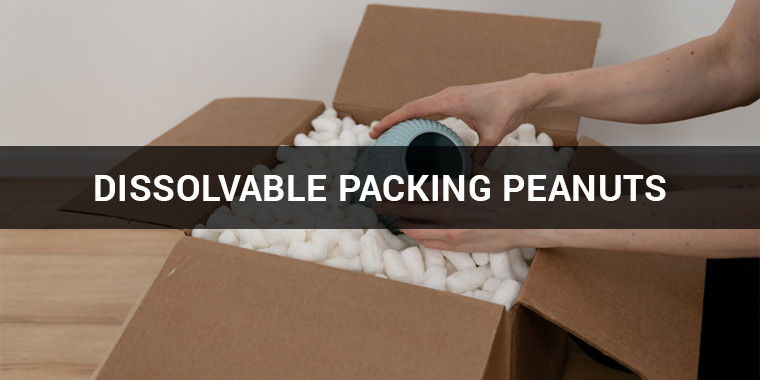
Line the bottom of your shipping box with a layer of dissolvable peanuts to create a soft, shock-absorbing base.
2. Cushion your items:
Place your product or fragile item in the center, then pour additional peanuts around it until all gaps are filled. Make sure your items can’t shift during transit.
3. Seal and ship:
Gently press down the top layer of peanuts to compact them slightly before sealing the box. They’re lightweight, so they won’t add unnecessary shipping weight.
Bonus: Ideal for mailing glassware, electronics, crafts, or any delicate goods that need secure yet sustainable protection, peanuts must be stored in a dry place or a sealed bag.
To dispose:
- Run under tap water → dissolves in seconds
- Pour starch water down the drain.
- Check your local facilities. Some industrial composting programs may accept them.
- Or compost—breaks down like food scraps
Pros and Cons of Biodegradable Packing Peanuts
The rise of dissolvable peanuts is part of a larger movement toward zero-waste packaging. Read here the pros and cons of the sustainable packaging pellets that can help you make the right choice.
Benefits
- 100% biodegradable and compostable
- They break down quickly in the environment.
- They dissolve completely in water within minutes.
- They are safe to handle. They won't even cling to clothes or electronics.
- No recycling centers needed.
- Non-toxic.
Drawbacks
- They are heavier than Styrofoam.
- They can increase shipping costs.
- Don't offer the same level of cushioning as their polystyrene counterparts.
- The protective peanuts begin to dissolve if they get wet.
Dissolvable Peanuts vs. Styrofoam Peanuts
Let’s compare these two packaging materials and see which one delivers.
|
Features |
Dissolvable Packing Peanuts | Styrofoam Peanuts |
| Primary Material | Botanical starches | Polystyrene |
| Biodegradability | Fully biodegradable and compostable | Non-biodegradable |
| Disposal | Quickly dissolves in water |
Difficult to recycle. Ends up in landfills |
|
Environmental Impact |
Low. Breaks down harmlessly | High impact. Contributes to microplastic pollution |
| Weight | Heavier | Lightweight |
| Static Charge | None | High static cling |
| Water-Soluble | Yes | No |
| Non-toxic | Yes | No |
| Made from Renewable Resources | Yes | No |
Are Packing Peanuts Edible?
You will be surprised to hear that some dissolvable peanuts are technically edible. They are not designed as snacks. However, their food-grade ingredients are making them non-toxic. So YES, packing peanuts are edible.
Tip: Don't serve them at your next dinner party. The term edible packing peanuts is more about safety than flavor. They are not food; just consider them as non-toxic.
Conclusion
If you're looking for a safe and eco-friendly way to package items, dissolvable packing peanuts are the perfect option. They are the right choice for eco-conscious brands, online shops, and households.
Are you planning to ditch traditional foam for good? Switch to biodegradable foam peanuts now and support a greener approach.
Need consultation about custom packaging or inserts? Reach out to Custom Designs Boxes. Request an instant quote via email at sales@customdesignsboxes.com or call us at 888-385-1812.

Abdul Waheed
With over a decade of experience in the printing and packaging industry, I’ve dedicated my career to helping brands reshape their identity with creative, sustainable, and cost-effective packaging solutions. Being the CEO of Custom Designs Boxes, my mission is simple: to balance innovation with affordability so businesses of every scale can enjoy premium packaging truly reflecting their vision. When I’m not strategizing for the next big packaging trend, you’ll find me exploring design inspirations, mentoring my team, and building lasting relationships with clients.